Hidden Water Leak Detection in Long Branch, NJ
Advanced non-invasive thermal imaging and acoustic pinpointing to locate concealed leaks behind walls, ceilings, and subfloors before tearing out building finishes.
Locate Your Hidden Leak: (201) 510-1615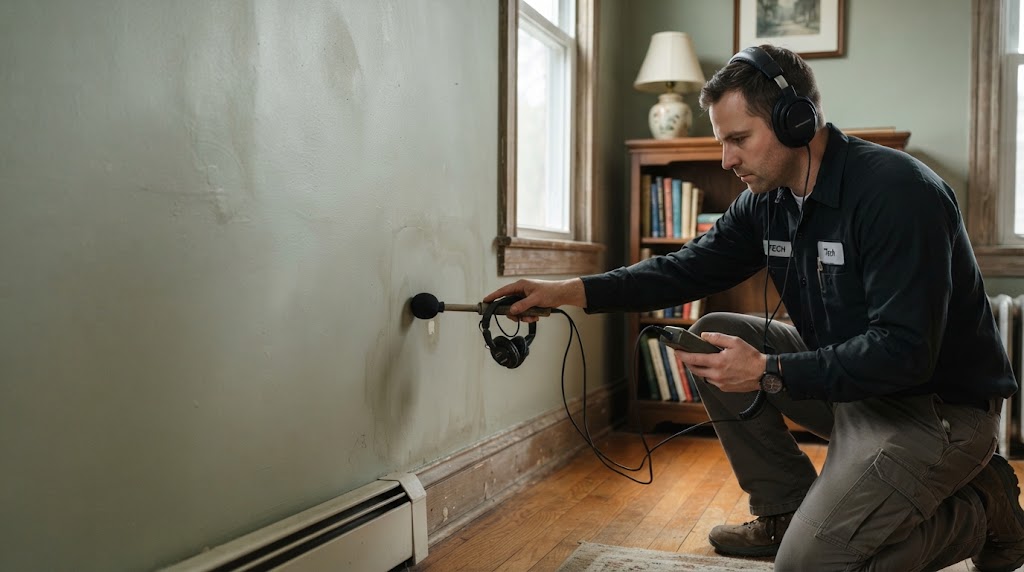
Pinpoint Hidden Plumbing Leaks Without Damaging Walls
A concealed water leak inside wall cavities, ceiling plenums, or subfloor assemblies can silently compromise your home's structural framing for weeks before moisture stains appear. Delivering specialized water leak detection Long Branch NJ property owners rely on, our non-invasive diagnostics identify the origin of moisture before any drywall is cut. Whether in luxury beachfront condominiums near Pier Village, historic Victorian residences in West End, or multi-family properties along Broadway, concealed leaks trigger progressive wood rot, ceiling collapses, and dangerous mold proliferation.
Because pressurized water travels along horizontal framing members, joists, and plumbing pipes before pooling downward, the visible water stain on a ceiling or baseboard is rarely located directly below the pipe breach. Engaging our specialized leak detection in Long Branch eliminates speculative demolition, identifying the exact fitting or pinhole failure with acoustic precision.
Warning Signs of a Concealed Water Leak
Concealed water leaks produce distinct physical and environmental changes throughout your living space. Contact our diagnostic team if you recognize any of these symptoms:
Observable Indicators Behind Finished Surfaces
- Unexplained Water Bill Inflation: Substantial volume increases on your monthly water bill despite unchanged household occupancy.
- Water Meter Activity with Fixtures Off: The municipal meter flow indicator dial turns continuously while every valve and fixture is secured.
- Discolored or Blistering Drywall: Yellowish water rings, peeling paint, bubbling wallpaper, or soft sponge-like drywall patches on walls and ceilings.
- Persistent Musty Odors: Unpleasant, earthy mold odors trapped inside hallways, utility closets, or bathroom partition chases.
- Sound of Trickling or Hissing: Faint water circulation sounds behind sheetrock in bathrooms or kitchens when the home is quiet.
- Warped Baseboards or Cupping Floors: Baseboard trim pulling away from the drywall or wood flooring planks crowning near interior walls.
Local Factors Creating Wall & Ceiling Leaks in Long Branch
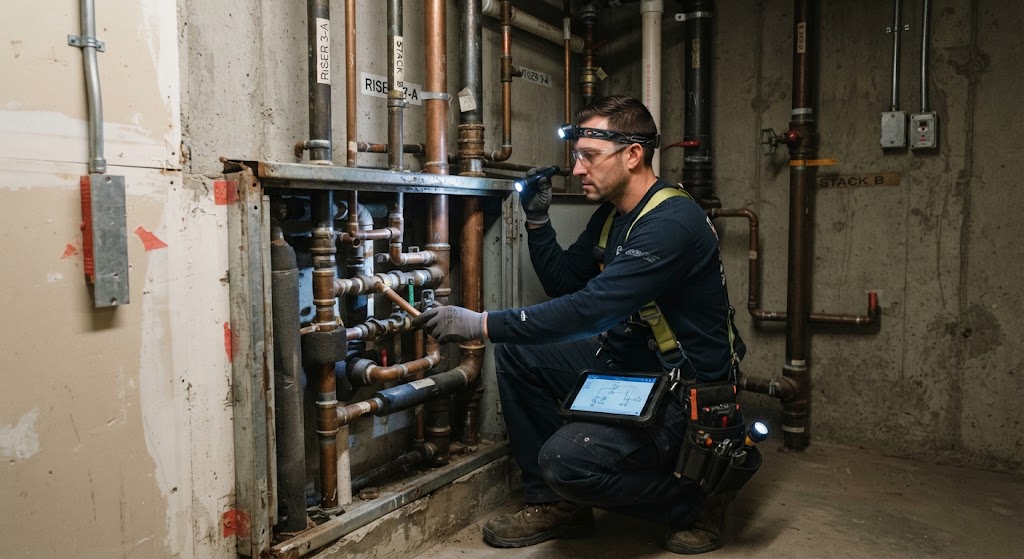
Long Branch homes experience unique environmental stressors that accelerate concealed plumbing failures. Salt-rich coastal air infiltrates exterior wall chases, creating accelerated galvanic oxidation on copper lines and brass shut-off valves. In multi-story buildings and beachfront condominiums, vertical water distribution risers undergo constant hydraulic pressure surges from booster pumps, fatiguing soldered joints.
Additionally, seasonal shifts bring sharp winter cold snaps off the Atlantic. Pipes installed along poorly insulated exterior walls can freeze and partially fracture, creating microscopic weeping fissures that only release pressurized water as the seasons warm. Structural settling in sandy soils also shifts joists against rigid piping, causing stress fractures at elbows and tees.
Non-Invasive Diagnostic Process for Hidden Leaks
We utilize an integrated multi-technology protocol to isolate leaks without tearing apart your interior finishes:
System Pressure Testing
We isolate specific hot and cold plumbing zones using precision test gauges to mathematically confirm pressure drop rates throughout the property.
Thermal Imaging Mapping
High-resolution FLIR infrared thermal cameras scan walls and ceilings to detect thermal signatures caused by evaporative cooling and hot water dispersal.
Acoustic Frequency Listening
Acoustic amplifiers and wall microphones capture the precise micro-frequencies generated by pressurized water escaping tiny pipe perforations.
Tracer Gas Pinpointing
For ultra-fine pinholes or heavily insulated cavities, we introduce a safe non-toxic tracer gas and use electronic sniffers to pinpoint the escape point.
What Happens After the Leak Is Found: Targeted Remediation
Once our diagnostics establish the exact location of the leak, we mark the coordinates directly on the wall or ceiling with non-marring tape and compile an objective technical summary. In New Jersey, physical plumbing alterations must be executed by a NJ licensed master plumber. Because we pinpoint the leak to within inches, repair options are clean and controlled:
- Single-Bay Drywall Opening: Your plumber removes a neat 6x6-inch drywall panel directly over the failed pipe fitting, avoiding widespread exploratory demolition across multiple rooms.
- Targeted Section Replacement: The plumber cuts out the damaged copper or PEX fitting, solders or crimps in a new replacement segment, and pressure-tests the joint before closing.
- Vertical Chases & Risers: In condominiums or two-story homes, an isolated riser repair resolves leaks between floors without disrupting ceiling structures in the unit below.
For ongoing corrosion issues, consult our detailed pipe leak repair guide to understand long-term copper and PEX replacement alternatives.
Cost Factors for Hidden Leak Diagnostic Services
The scope of hidden leak detection depends on several architectural and mechanical variables rather than flat pricing models:
- Accessibility of the Plumbing Network: Single-story residential bungalows have simpler pipe distribution networks than multi-level beachfront townhomes or mixed-use commercial buildings.
- Structural Wall & Ceiling Materials: Sound and heat travel differently through modern drywall versus historical lath-and-plaster, masonry chases, or double-sheetrock firewalls.
- Number of Suspected Zones: Complex properties with multiple bathrooms, wet bars, laundry rooms, and radiant floor zones require systematic isolation.
- Secondary Moisture Saturation: Extensive moisture spreading requires broader thermal scanning to distinguish active leaks from residual pooling.
Prevention Tips & Emergency Response
Protecting your Long Branch home from hidden water leaks begins with regular mechanical vigilance. Install smart water monitors on your main water inlet that automatically shut the water off if abnormal continuous flow is registered. Maintain interior building heat at a minimum of 55°F during coastal winter freezes, especially in unheated utility rooms and crawlspaces.
When a Hidden Leak Demands Emergency Action
If you see a bulging ceiling blister holding gallons of water, water dripping through light fixtures, or water pouring down wall cavities near your electrical breaker box, shut down your main water valve and electrical panel immediately. Follow our emergency leak repair safety protocol to minimize structural water damage while help is en route.
Neighborhood Focus: Pier Village & West End
Concealed water leaks are especially disruptive in high-density residences near Pier Village and West End, where moisture can migrate across party walls into adjoining condominium units. Rapid non-invasive pinpointing prevents costly multi-unit liability claims.
View All Long Branch Service AreasFind the Source Before Opening Your Walls
Do not allow contractors to guess where your leak is coming from. Call NJ Leak Detection for non-invasive thermal and acoustic testing.
Call (201) 510-1615