Water Line Leak Detection in Long Branch, NJ
Acoustic and electronic underground service line pinpointing between the street curb stop and your foundation wall across Monmouth County residential and commercial properties.
Talk with a Local Leak Specialist: (201) 510-1615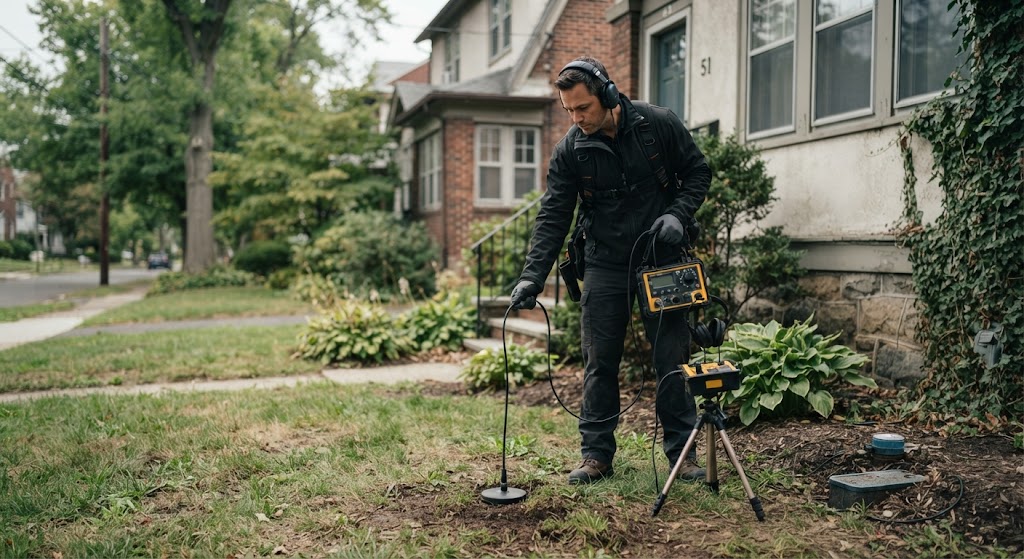
Locate Underground Service Line Leaks Without Yard Trenches
A ruptured underground water service line running through your front lawn or driveway wastes thousands of gallons of treated municipal water every 24 hours while threatening your foundation footings. When you need expert water line leak detection Long Branch NJ property owners trust, acoustic ground testing identifies the exact failure point before any heavy machinery arrives. In coastal Monmouth County communities like North Long Branch and Branchport, sandy topsoil easily absorbs subterranean water, allowing high-volume leaks to run undetected beneath driveways for months.
Because escaping water erodes subsoil, ignoring an underground line leak can result in sudden sinkholes, pavement collapse, and severe basement foundation flooding. Rather than trenching your entire landscaped front yard from the street to the house, our leak detection in Long Branch protocols isolate the underground rupture point with pinpoint accuracy.
Warning Signs of a Main Water Line Break
Underground service pipe leaks present clear physical indicators on your grounds, inside your basement, and across your plumbing fixtures:
Key Symptoms Between the Curb and Foundation
- Soggy or Spongy Lawn Patches: Unexplained standing water, marshy turf, or patches of abnormally vibrant grass during dry weather between the street and foundation.
- Sudden Household Water Pressure Drops: Noticeable loss of volume and pressure when multiple faucets or showers run simultaneously.
- Hissing Sound at the Main Shut-Off Valve: A constant vibration or roaring sound heard at the water meter or main entrance pipe when all interior fixtures are idle.
- Discolored or Murky Tap Water: Brown, reddish, or sediment-filled water coming from indoor faucets caused by soil intrusion through a broken underground pipe.
- Pavement or Paver Settlement: Sinking pavers, cracked asphalt, or depressed driveway sections above the buried utility trench.
Local Causes of Service Line Failures in Long Branch
Long Branch coastal geology and infrastructure history create distinct vulnerabilities for buried water service lines. The sandy soil along Route 36 and near the beachfront is highly permeable and prone to subterranean shifting from changing groundwater levels and ocean tides. This movement exerts severe shear stress on rigid pipe joints.
Additionally, many older homes in Branchport and North Long Branch still have legacy galvanized steel or lead service lines installed decades ago. New Jersey requires water utilities to replace lead service lines, and aging lead or galvanized pipes are brittle and prone to catastrophic cracking. Severe winter frost penetration further stresses shallow service lines buried above the frost line.
Step-by-Step Underground Detection Methodology
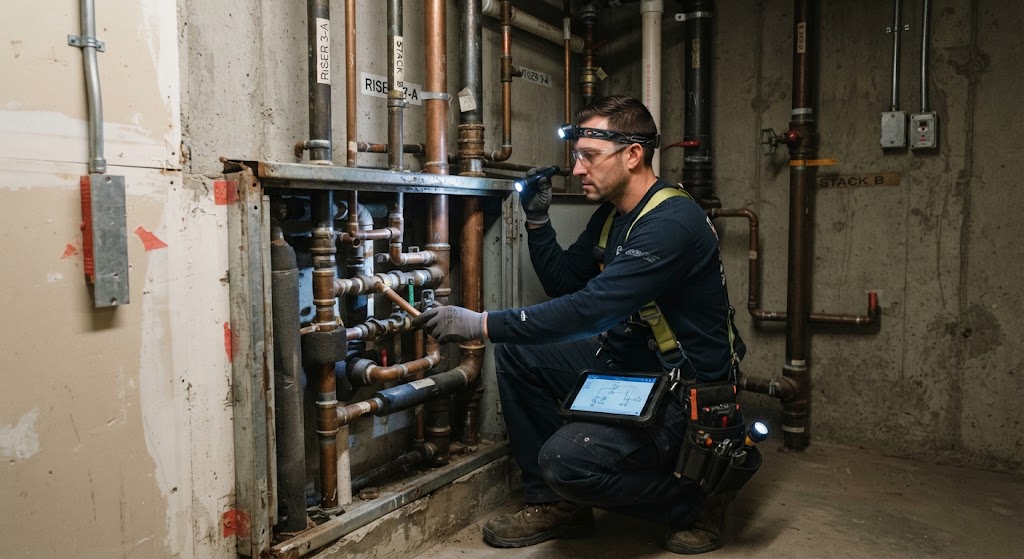
Pinpointing a buried water service line beneath turf, asphalt, or concrete requires specialized field instrumentation:
Boundary Isolation Testing
We check the curb stop valve at the street and compare meter telemetry to isolate whether the leak is on the private service line or the municipal utility side.
Electromagnetic Utility Mapping
An electromagnetic transmitter induces a signal onto the metallic line, tracing the exact depth and path of the pipe across your lawn.
Ground Microphone Survey
Our specialist moves along the mapped pipe path with high-sensitivity acoustic ground sensors to register pressurized water hiss through soil and pavement.
Tracer Gas Line Verification
If soil conditions muffle sound, safe non-flammable tracer gas is introduced into the line and detected at ground level with hydrogen sensors.
What Happens After Detection: Repair & Replacement Options
Once the exact rupture coordinate is established, our report provides all necessary diagnostic data for your repair team. Remember, in New Jersey, plumbing repairs require a NJ licensed master plumber. Furthermore, New Jersey state law mandates calling NJ One Call (811) before digging to ensure buried utility lines are marked before excavation. Repair approaches include:
- Targeted Excavation Spot Repair: If the service line is relatively modern copper or high-density polyethylene (HDPE) in sound overall condition, a small excavation directly over the leak allows your plumber to install a heavy-duty compression coupling.
- Trenchless Directional Boring: To replace an entire compromised line without digging up your lawn or driveway, trenchless horizontal boring pulls a continuous new polyethylene line from the curb to the foundation through two small access pits.
- Lead Service Line Modernization: Under New Jersey's mandatory lead replacement mandate, older lead or galvanized lines should be upgraded in their entirety to modern seamless copper or NSF-approved HDPE tubing.
If an underground pipe failure compromises interior pipes or foundations, our slab leak detection and pipe leak repair services ensure comprehensive protection.
Cost Factors for Underground Water Line Detection
The scope of underground line diagnostics is determined by unique site conditions without arbitrary price quotes:
- Depth and Surface Materials: Lines buried beneath standard sod require different acoustic filters than lines running under reinforced concrete driveways, pavers, or asphalt.
- Pipe Material Composition: Metallic copper and ductile iron lines conduct acoustic and electromagnetic signals more readily than non-metallic PVC or poly lines.
- Length of the Service Run: Waterfront estates with long setbacks from Route 36 or Ocean Avenue require broader linear acoustic sweeps than compact urban lots.
- Ambient Environmental Noise: Proximity to heavy coastal traffic or surf noise may require nocturnal acoustic surveys or tracer gas testing.
Prevention Tips & Emergency Response
Preventing underground water line disasters requires awareness of your property's plumbing infrastructure. Always call 811 before installing fences, landscaping trees, or irrigation systems. Inspect your curb stop box annually to ensure it remains clear of debris and accessible to emergency personnel.
When an Underground Leak Is an Urgent Emergency
If escaping water creates a visible sinkhole near your driveway, causes basement foundation wall bowing, or undermines public sidewalk slabs, shut off your water immediately. If water enters your structure, follow our emergency leak repair guidance to protect your property while diagnostic help responds.
Neighborhood Focus: North Long Branch & Branchport
Subterranean service line ruptures are frequent in North Long Branch and historic Branchport neighborhoods, where legacy utility connections interact with changing groundwater levels near the Shrewsbury River and coastal tributaries.
View All Long Branch Service AreasPinpoint Underground Service Leaks Accurately
Save your lawn and driveway from unnecessary excavation. Contact our Long Branch underground diagnostic team today.
Call (201) 510-1615