Pool Leak Detection in Long Branch, NJ
Precision dye testing and hydraulic pressure testing to identify leaks in swimming pool shells, skimmers, light niches, and subterranean plumbing lines across coastal Monmouth County.
Schedule Pool Leak Testing: (201) 510-1615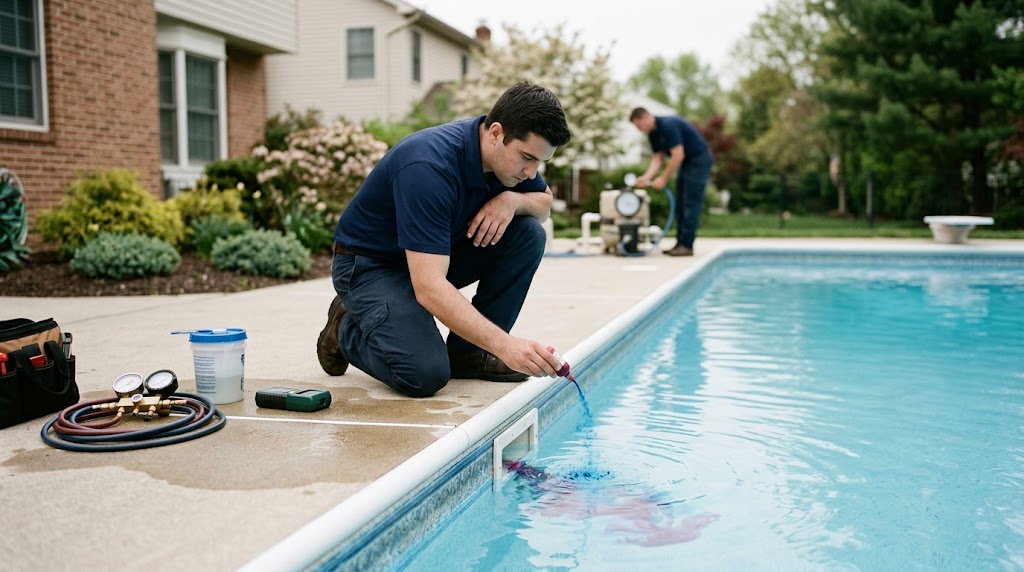
Expert Swimming Pool Leak Pinpointing in Coastal Long Branch
A leaking in-ground swimming pool in coastal Long Branch compromises structural decks, washes away supportive sandy bedding, and drives up municipal water and chemical costs. Delivering professional pool leak detection Long Branch NJ property owners rely on, our non-destructive diagnostic methods locate shell fissures and subterranean plumbing breaks without needless demolition of your patio or pool coping. Across luxury estates in West End and Elberon, pools represent substantial investments that demand precise seasonal care.
Because coastal Long Branch experiences ocean winds and intense summer sunlight, many pool owners mistake significant water loss for simple evaporation. However, losing more than a quarter-inch of water daily typically signals a structural or subterranean plumbing rupture. Partnering with our specialized leak detection in Long Branch team ensures you locate the exact source of water loss quickly and accurately.
Warning Signs of a Swimming Pool Leak
Distinguishing an active leak from seasonal evaporation requires watching for subtle changes around the pool basin and mechanical pad:
Common Pool Leak Warning Signs
- Accelerated Water Level Loss: Dropping more than 1/4 inch of water every 24 hours that exceeds evaporation benchmarks established by a bucket test.
- Continuous Autofill Activity: Automatic water leveling valves running constantly or high summer water utility bills.
- Sinking Patio Pavers or Deck Cracks: Settling concrete deck slabs, cracked coping stones, or depressions in landscaping adjacent to the pool basin.
- Air Bubbles in Return Jets: Constant streams of air bubbles blowing into the pool, signaling a suction-side subterranean plumbing leak.
- Algae Growth Despite Chemical Balance: Rapid chemical dilution and persistent algae blooms resulting from constant untreated freshwater replenishment.
- Wet Soil Around the Equipment Pad: Persistent pooling water beneath pumps, filter manifolds, and heater connections.
Local Causes of Pool Leaks in Long Branch Coastal Soils
Long Branch coastal environmental factors place exceptional physical demands on swimming pool systems. Sandy soil exhibits high porosity and natural shifting under tidal water tables. When heavy rains or high groundwater saturate the ground, hydrostatic pressure can flex gunite and vinyl pool structures, straining rigid underground PVC plumbing joints.
Furthermore, coastal winter freezes along the Jersey Shore severely threaten pool systems. Inadequate autumn winterization leaves residual water in return lines, main drains, or skimmer housings. When freezing temperatures arrive, expanding ice fractures brittle PVC fittings. Come spring opening, underground lines immediately begin leaking pressurized water into the surrounding soil.
Our Step-by-Step Pool Diagnostic Testing Process
Locating a pool leak requires methodical isolation of the structural vessel, mechanical equipment, and buried pipe networks:
Bucket Test & Evaporation Baseline
We establish a calibrated evaporation control test to mathematically verify whether daily water loss exceeds ambient Jersey Shore evaporation rates.
Visual & Fluoroscopic Dye Analysis
Technicians inspect skimmer throats, returns, underwater light conduits, and drain fittings using concentrated precision dye to identify micro-drafts.
Plumbing Pressure Isolation
We seal suction and return lines with pneumatic test plugs and pressurize each isolated line with inert gas to observe gauge decay.
Acoustic Underground Tracing
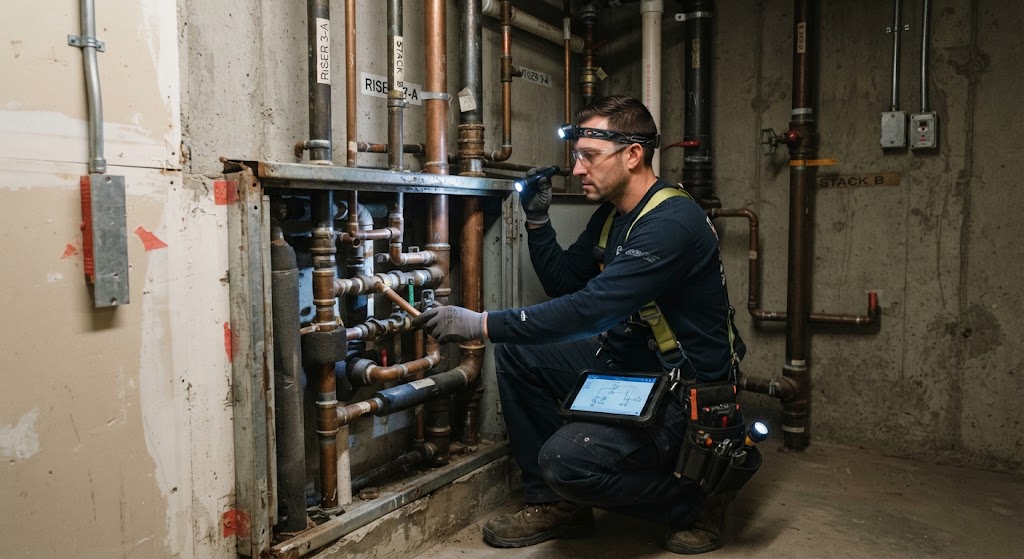
For lines showing pressure loss, hydrophones and ground microphones listen through concrete decks to pinpoint the subterranean break coordinate.
What Happens After the Leak Is Found: Repair Solutions
Once our diagnostics establish the exact failure point, we provide an explicit diagram indicating whether the breach is structural or plumbing-related. In New Jersey, plumbing repairs require a NJ licensed master plumber, while specialized pool contractors execute shell bonding. Repair approaches include:
- Skimmer & Light Niche Epoxies: If dye testing locates a fracture in the skimmer throat or electrical conduit seal, specialized two-part underwater polymers can seal the leak without draining the pool.
- Targeted Deck Core Excavation: If pressure testing confirms a severed underground return or suction line, the repair contractor cuts a single small core through the deck directly over our marked coordinate, avoiding widespread patio removal.
- Structural Crack Injection: Fissures across concrete or gunite pool shells are stabilized using high-strength hydraulic cements or structural staples to prevent water migration.
If your property also experiences domestic water line or sprinkler issues, explore our water line leak detection and irrigation leak detection services.
Cost Factors for Pool Leak Diagnostic Procedures
The technical effort required to detect pool leaks varies according to system complexity rather than flat pricing models:
- Pool Size & Vessel Type: Concrete/gunite, vinyl liner, and fiberglass shells each present distinct diagnostic protocols and surface testing requirements.
- Plumbing Features: Basic single-skimmer pools require less isolation time than complex systems with attached spas, infinity edges, waterfalls, and multiple main drains.
- Deck & Surrounding Finishes: Acoustic listening through stamped concrete or stone pavers requires specialized frequency filtration compared to standard grass perimeters.
- Water Clarity & Cleanliness: Crystal-clear water is essential for visual and dye testing; cloudy water requires filtration before testing can proceed.
Prevention Tips & Emergency Mitigation
Protecting your Long Branch pool requires diligent seasonal maintenance. Have your pool professionally blown out and winterized with non-toxic antifreeze in autumn. In spring, inspect skimmer throats and pump gaskets before turning circulation systems on. Maintain proper water chemistry to prevent acidic etching of mechanical seals.
When a Pool Leak Demands Immediate Action
If a massive plumbing rupture is actively undermining your pool deck or causing concrete patio slabs to tilt toward the pool basin, shut down all pool pumps immediately and turn off the autofill supply line. If water flows toward your home's foundation, consult our emergency leak repair guidelines immediately.
Neighborhood Focus: West End & Elberon
In-ground pools are prominent across private residential properties in West End and Elberon, where sandy subgrades make timely leak detection essential to prevent sub-deck erosion and pool shell settling.
View All Long Branch Service AreasStop Losing Water from Your Swimming Pool
Protect your pool deck and foundation from subterranean washouts. Call our Long Branch pool leak diagnostic team today.
Call (201) 510-1615